
Today’s reports of a 28-point US-Russia peace plan for Ukraine landed with a familiar weight. Before politicians debated it, and before analysts dissected it, many Ukrainians already recognised its shape. Not because they had seen this exact document before – though it bears remarkable similarity to maximalist Russian demands – but because they had lived through versions of it over generations.
The leaked draft proposes that Ukraine accept the loss of occupied (and unoccupied) territory in the Donbas, scale down its armed forces, limit long-range weapons, grant Russian official-language status, and formally recognise the Russian Orthodox Church. In exchange, it offers vague security guarantees from states that have struggled to uphold past guarantees, most visibly in 1994. None of this is an accusation; it is a reminder of how similar proposals have been framed before.
To US diplomats these may appear as painful but realistic terms. Everyone wants the war to end; the deeper question is what kind of peace is being built in its place. However sincerely some may wish for a compromise, history shows the imbalance such arrangements can create. To Ukrainians, these are not new proposals. They are historical, unquiet echoes.
What History Remembers
Europe has been here before. In 1938 the language used about Czechoslovakia was nearly identical: stabilisation, realism, the need to make difficult compromises for the sake of peace. Munich was framed as an unpleasant but necessary way to quieten a noisy continent. Czechoslovakia was not asked for its view. The concession arguably accelerated Hitler’s ambitions, providing a reminder of how aggressors often treat concessions.
Ukraine’s recent history offers a perhaps more striking parallel. After Russia’s 2014 seizure of Crimea and intervention in the Donbas, the Minsk agreements were presented as a pragmatic path to stability; a way to freeze the conflict and prevent something worse.
Instead, the years after Minsk were used by Russia to regroup, rearm, and position forces for the full-scale invasion of 2022.
The pattern is familiar: a negotiated concession meant to stabilise the situation becomes the foundation for a larger, more destructive phase of aggression.
Ukraine’s history holds multiple such moments.
Echoes in the Present
Turning slightly further back in time: in the 17th century, the Cossack Hetmanate entered alliances meant to protect its autonomy. Each agreement came with guarantees. Each was later reinterpreted, watered down, or quietly overwritten. Russian officials arrived as advisers; Ukrainian institutions were restructured for efficiency. No single decree dissolved autonomy; it eroded gradually through a sequence of small, practical adjustments that reshaped the political landscape.
Territory was absorbed through the language of order, inevitability, and pragmatic compromise.
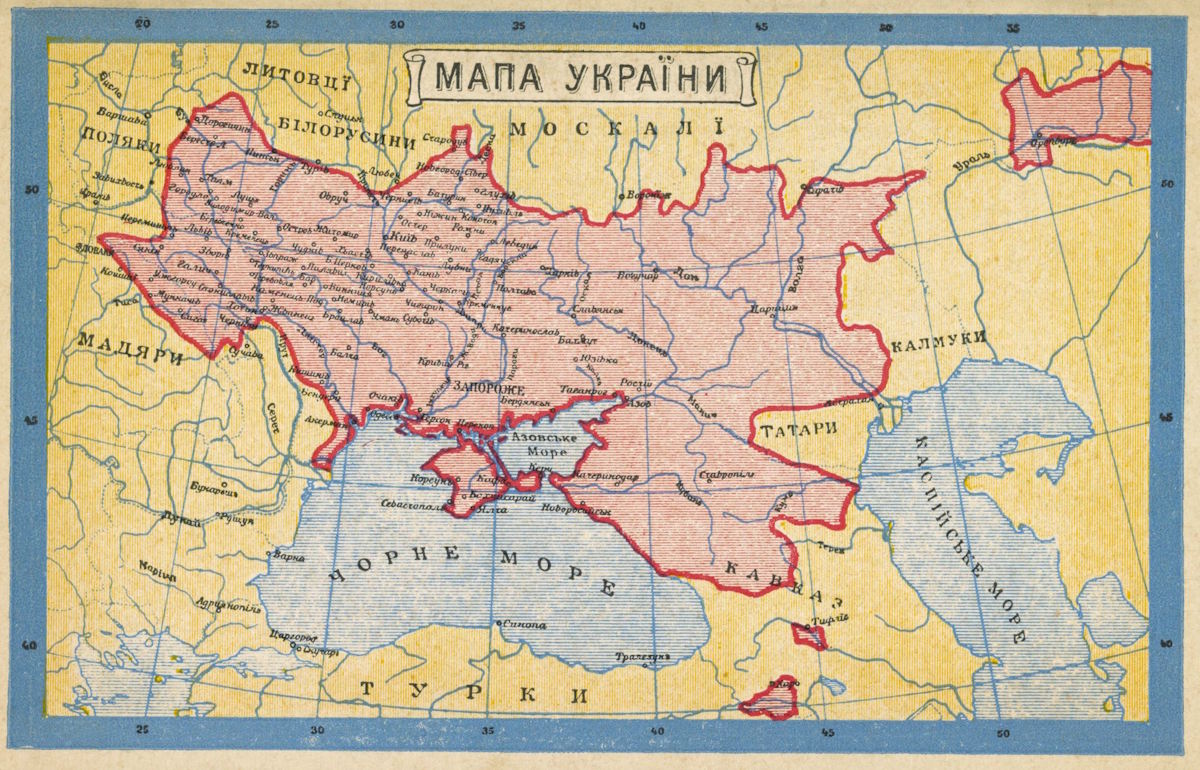
The Kuban – once overwhelmingly Ukrainian in language and culture – experienced something even more striking. In the early 1930s, Moscow did not ask for land. It demanded a shift in who the population was allowed to be. Ukrainian schools were closed, cultural institutions dismantled, and the Holodomor of 1932–33 was used as a tool to break local resistance. Within a generation, a region that had sung Ukrainian songs and followed Ukrainian rites had been recast as something else entirely.
When the leaked peace plan proposes official status for the Russian language and protections for the Russian Orthodox Church, Ukrainians hear this history. Concessions on language or religion have rarely been symbolic. They have been structural – foundations upon which wider assimilation and enforced Russification are built.
And this is not only visible at the level of borders, or institutions. Writing The Quiet That Remains, I considered how political decisions made far away seeped into the silence of a family: how policies of Russification in the 1890s, collectivisation in the 1930s, and Soviet cultural controls in the 1950s shaped what could be spoken and what remained unsaid. These pressures reached into households, documents, and memories. They shaped the stories that survived and the ones that fell quiet.
Which is why proposals today – to limit a country’s armed forces, regulate its language, or adjust its religious landscape – are not heard as technocratic details. They are recognised as the same mechanisms that shaped the inner lives of people who never imagined their private worlds would be rearranged by them.
Promises on Paper
One part of the leaked plan offers security guarantees to Ukraine and Europe. History gives Ukrainians little reason to trust such assurances. In 1994 Ukraine surrendered the world’s third-largest nuclear arsenal in exchange for the Budapest Memorandum, which pledged that its borders and sovereignty would be respected. Two decades later those promises collapsed.
The contrast in the draft plan is stark: Ukraine is asked to make irreversible, concrete concessions; in return, it receives political commitments that may or may not survive the next election cycle.
The View From Ukraine
Perhaps the most familiar element is procedural: Ukraine did not participate in drafting the plan. European partners learned about it second-hand. Once again, discussions take place around Ukraine, rather than with it.
This has happened in many forms. The Hetmanate’s treaties rewritten in Moscow. The secret clauses of the 1918 Brest-Litovsk settlement that redrew Ukrainian borders without Ukrainian consent. Policies for the Kuban decided in the Kremlin. Each time, the affected people were presented with a reality shaped without them.
The echo is uncomfortable. And unmistakable.
When Ukrainians reject the idea of ceding territory for peace, it is historical memory rather than obstinacy or nostalgia. A knowledge, earned through generations, of what follows when a stronger power is indulged in the hope that it will be satisfied.
The leaked plan assumes that if Ukraine surrenders pieces of its land, limits its defence, and yields to cultural adjustments, the threat will recede. Ukrainian history – and much of Europe’s – suggests the opposite.
Aggression responds not to concessions, but to the opportunities they create.
Related: The Quiet That Remains · An Introduction · Essay index ·